What 'ABDM-ready' actually means. (And what to ask.)
Half the Indian healthtech vendors have ABDM-ready on their homepage. Half of those don't issue an ABHA. Here is how to tell.
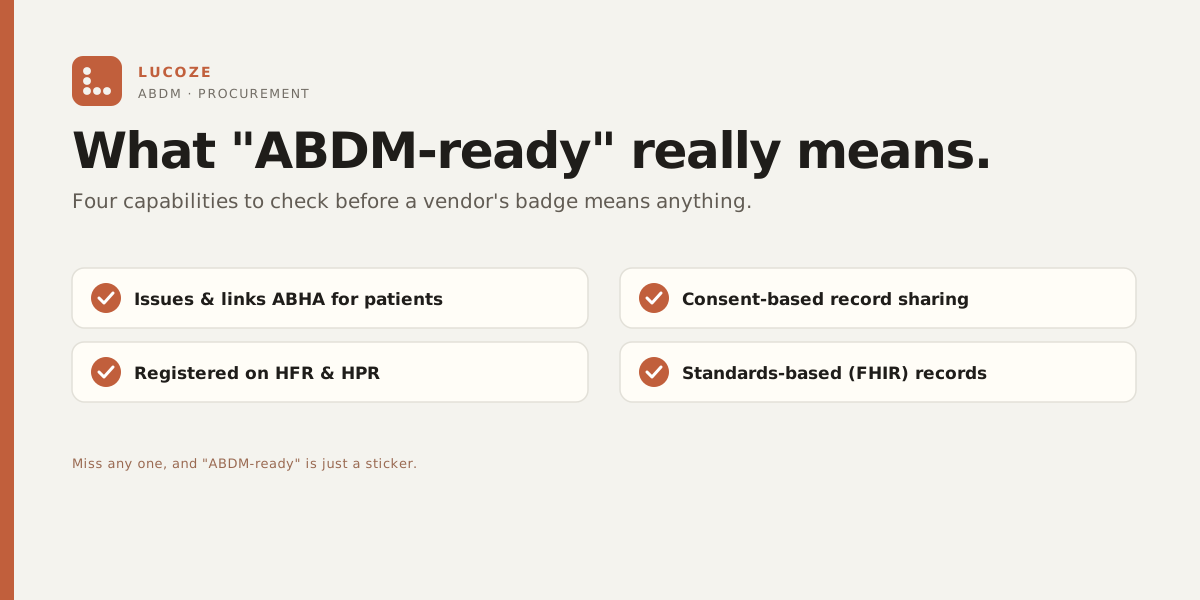
The claim is everywhere. The capability isn’t.
If you have evaluated any clinic SaaS in the last 18 months, you have seen “ABDM-ready” on the homepage. It means many things. Sometimes it means the vendor has integrated with the National Health Authority’s APIs. Sometimes it means they have a roadmap item for next quarter. Sometimes it means a single demo screen that doesn’t survive a real visit.
Here is the diligence checklist we wish more buyers used.
1. Can you create an ABHA in front of the patient?
Ask the vendor to demo this live. The patient walks in, gives a mobile number, and an ABHA is created in under 90 seconds, capturing both the ABHA number and address. If the demo skips this step (“we’ll show this in the next call”), the capability isn’t there.
2. Are your doctors HPR-registered through the platform?
If yes — you can issue records that the rest of the ABDM ecosystem will accept. If no — you’re issuing records that don’t federate.
3. Is the consent manager integrated?
Cross-provider record sharing works only with the consent manager. Ask: “When Dr. A at our clinic needs to see records the patient created at Hospital B, how does the consent flow happen?” If the answer is “manually via the patient,” the integration isn’t there.
4. Which APIs do you use?
The NHA publishes a list of approved sandbox APIs on the ABDM sandbox portal. The vendor should be able to name them. If they hedge — “we use a partner integration” — ask which partner, then check that partner’s NHA listing.
5. Where does the data live during ABDM transit?
ABDM is consent-based federation — records stay with whoever created them. But the consent token and audit trail move between providers. Ask: where are those tokens stored, and for how long?
Our answer
Lucoze issues and verifies ABHA-linked records. HPR + HFR onboarding is part of clinic setup. Consent manager is wired. Audit logs are kept for 7 years, in India. Ask us the diligence questions above; we’d rather you ask the hard ones now.