For dental groups · chair-led practices

Chair utilisation. Treatment plans. Imaging tied to the patient.

Dental is chair-led, not doctor-led. The same chair runs 3-4 procedures a day across two practitioners. Treatment plans run 6 months, with EMIs that customers pay in chunks. Lucoze treats the chair as a first-class object — not a calendar block.

Why Lucoze fits Dental groups

The four things we got right for you.

Chair-level scheduling
Each chair has its own queue. Utilisation visible at 4pm — you spot the dead Tuesday afternoon before it costs you a month.
Treatment plans + EMIs
Crown + RCT + bleach is one plan, 4 visits, 6 EMI instalments. Patient sees one bill, you see the open balance.
Imaging on the timeline
OPG, IOPA, CBCT — attached to the visit, viewable from the doctor’s chair. No flipping to the imaging laptop.
Recall calendar
Cleaning at 6 months, post-op review at 7 days — automated, opt-out per patient.
Live preview

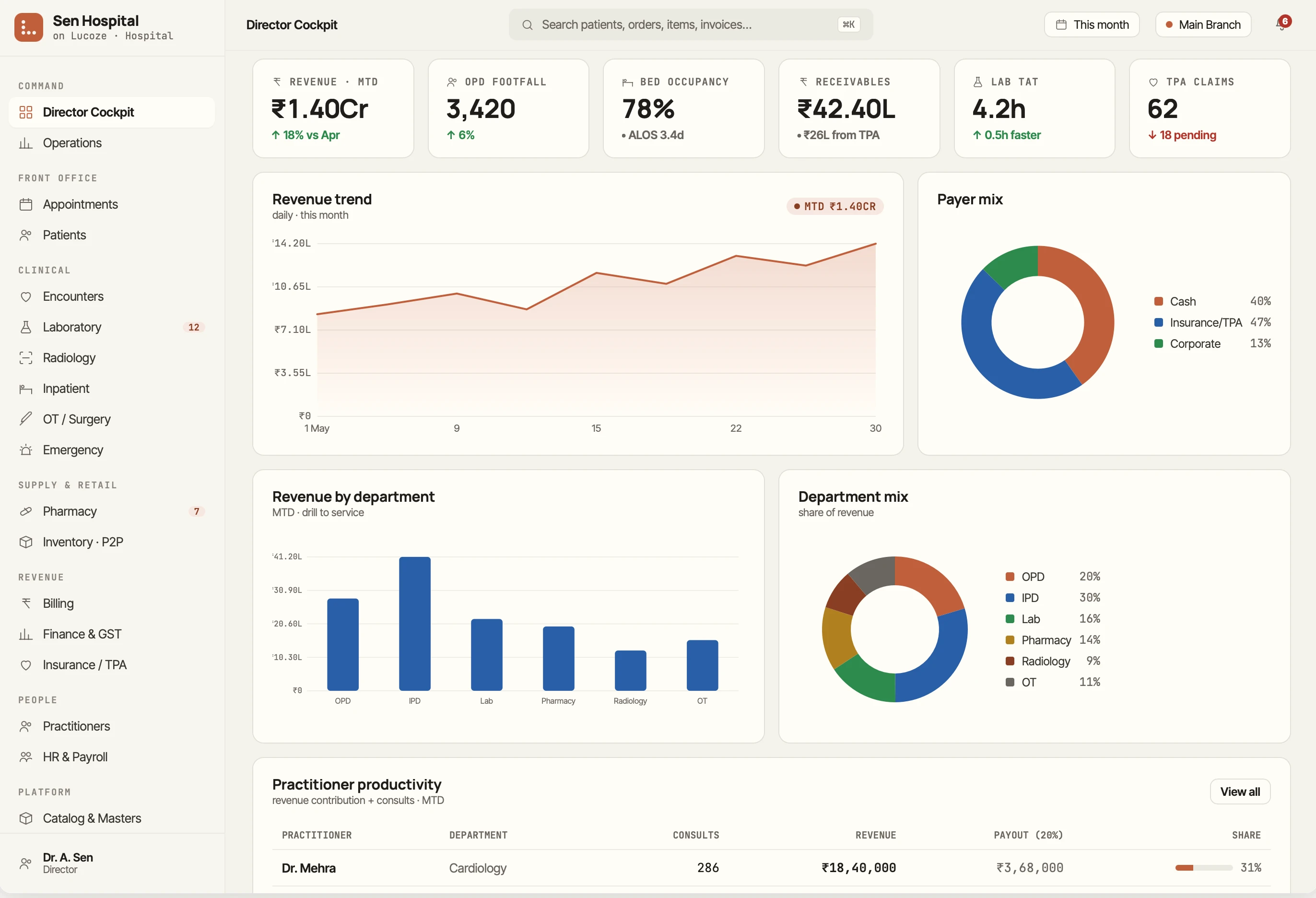
This is what Dental groups looks like in Lucoze.

Director cockpit — revenue and operations overview for a dental group in Lucoze

Built around the chair, not the doctor

In most clinic software the calendar is keyed to a doctor. In a dental group the real constraint is the chair: two practitioners share one operatory, and procedures overrun. Lucoze schedules against the chair, so a delayed RCT reshuffles that chair's queue without touching the other operatory. Utilisation per chair is visible through the day — which is exactly where a dental group's margin quietly leaks.

Treatment plans that span months, billed the way patients pay

A crown, an RCT and a whitening are one clinical plan across several visits, usually paid in instalments. Lucoze keeps the plan, its visits and the running balance on a single record, so the front desk always knows what has been paid and what is due — and the patient sees one coherent bill instead of a separate charge per appointment.

Lab work that goes out and has to come back

Crowns, bridges and dentures leave the clinic for an external dental lab and return days later. That gap is where dental scheduling goes wrong: the second appointment gets booked before the work is back, the patient turns up, and the chair sits idle. Lucoze tracks each lab case as it leaves and when it is due, and ties it to the patient's plan, so the front desk can see whether the crown has returned before it offers a fitting slot. Cases still out with the lab stay visible instead of surfacing only when a patient arrives to an empty tray.

Common questions

Dental groups, the questions we hear first.

Can Lucoze handle multiple chairs and practitioners in one clinic?

Yes. Each chair has its own schedule and queue, and a procedure is assigned to whichever practitioner runs it. Utilisation is tracked per chair, so idle time is visible before it costs you a week.

How are dental imaging files (OPG, IOPA, CBCT) stored?

Imaging attaches to the visit on the patient timeline and is viewable from the operatory, so there's no switching to a separate imaging machine mid-appointment. Files stay in Indian data centres like the rest of the record.

Does it support instalment (EMI) treatment plans?

Yes. A multi-visit plan can carry an instalment schedule; each payment is tracked against the plan balance, and the patient receives one consolidated statement rather than per-visit invoices.

Can it track work sent to an external dental lab?

Yes. A crown, bridge or denture sent out is logged as a lab case against the patient's plan, with a due date for its return. The fitting visit can be checked against whether the work is back, so a patient isn't booked before the lab has delivered.

Plan that fits

Clinic Pro

Includes all features above plus migration support and 14-day free trial. See pricing →

Book a demo — Dental groups

Talk to us about Dental groups.

We'll skip the demo if you'd rather just ask questions. 30 minutes, founder included.