For IVF clinics · cycle-based workflow

A cycle is not a visit. Your software shouldn't treat it like one.

IVF runs in cycles — stimulation, OPU, fertilisation, transfer, beta. Each cycle is 14-21 days, with multiple visits, hormone tracking, embryo grading, and EMI billing that spans the whole journey. Most clinic SaaS forces you to fake this. Lucoze models it natively.

Why Lucoze fits IVF clinics

The four things we got right for you.

Cycle as the unit of work
Open a cycle, see the protocol, the day count, the upcoming tests. Patient summary shows cycle progress on top.
Embryo lab integration
Day-3, day-5 grades attached to the cycle. Cryopreservation tracked over years. Audit-ready for ICMR norms.
EMI plans + counseling
12-month EMI plans with the counsellor’s notes on cost discussions. No invoice surprises mid-cycle.
Regulatory compliance
Records aligned to the ART (Regulation) Act, 2021 and the Surrogacy (Regulation) Act, 2021 — the two separate statutes an ART clinic reports under. Ready for the registrar.
Live preview

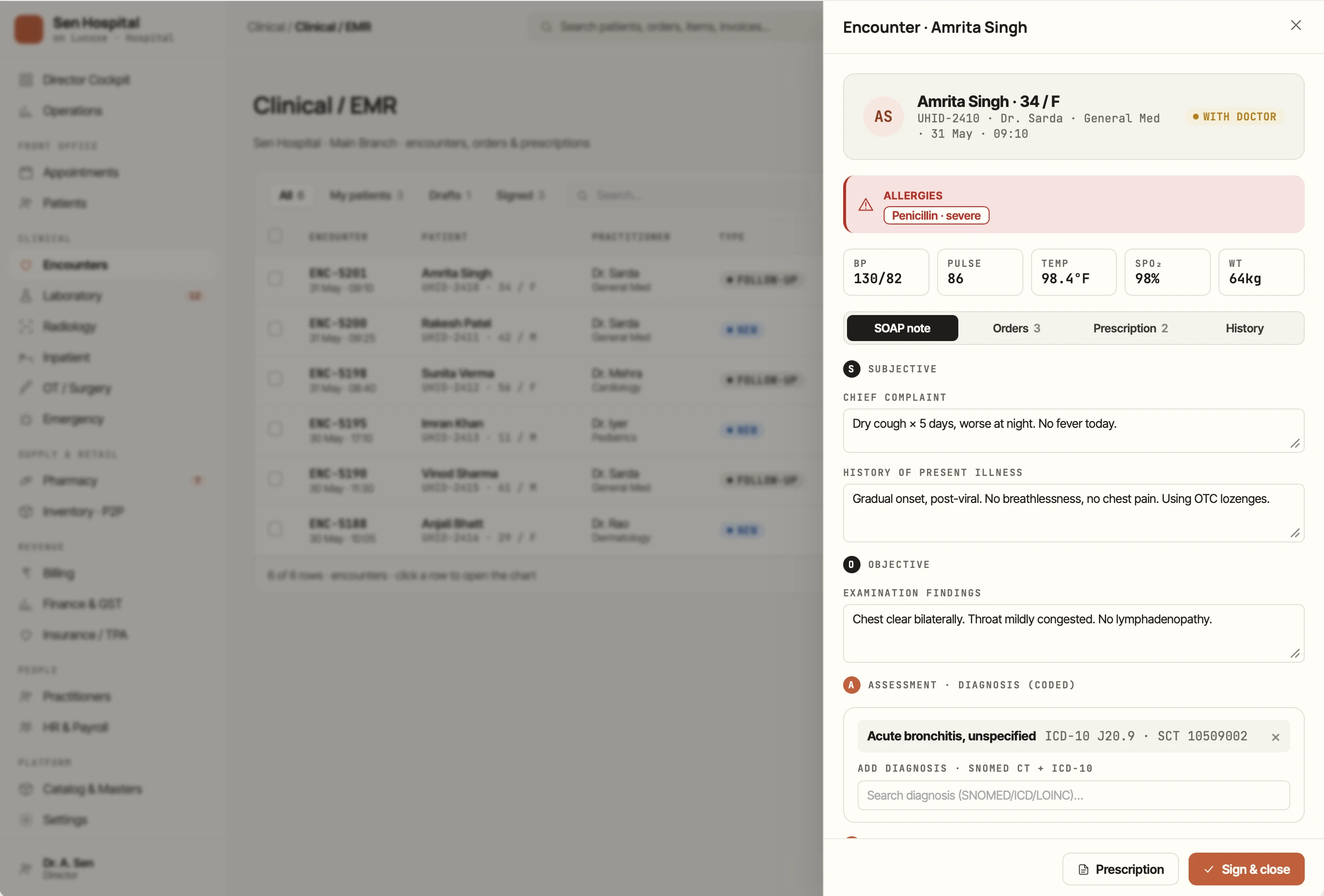
This is what IVF clinics looks like in Lucoze.

Patient encounter and cycle records for an IVF clinic in Lucoze

The cycle is the unit of work, not the visit

An IVF journey is a cycle — stimulation, OPU, fertilisation, transfer, beta — running over roughly two to three weeks with many visits, hormone readings and embryo grades along the way. Most clinic software forces this into a series of disconnected appointments. Lucoze opens a cycle as a single object: the protocol, the day count and the upcoming tests sit on one view, and the patient summary shows cycle progress on top.

Billing and records that fit a regulated, high-cost journey

IVF is expensive and usually paid over an instalment plan, with the counsellor's cost discussions on record. Lucoze keeps the plan and the running balance attached to the cycle, so there are no mid-cycle billing surprises. Cycle, donor and consent records are organised to line up with the ART (Regulation) Act, 2021 and the Surrogacy (Regulation) Act, 2021 — the two separate statutes an ART clinic reports under.

One linked file for the couple, not two that never reconcile

Fertility care is a couple's journey, but most records are built around one patient at a time. Lucoze links a couple's two records so the shared history, each partner's tests and the consent captured from both sit together against the same cycle. Billing runs against the couple, not split across two files that never reconcile. When a partner's result or a donor detail matters mid-cycle, it is on the record the clinician already has open — not in a second file someone has to go and find. The link is explicit, so who consented to what stays clear across every cycle the couple goes through.

The stimulation protocol becomes a schedule the patient can follow

A stimulation protocol is a run of injectables on set days, and the patient gives most of them at home. Lucoze holds the protocol against the cycle — which drug, what dose, which day — and turns it into a schedule the patient can follow, so a missed or mistimed injection is less likely to derail a cycle. As monitoring comes back and doses are adjusted, the change sits on the same cycle record rather than on a loose note. The clinician sees the protocol as prescribed, the patient sees what to take today, and both are reading the same plan.

Common questions

IVF clinics, the questions we hear first.

Does Lucoze model an IVF cycle rather than single appointments?

Yes. A cycle is one record spanning stimulation through beta, with the protocol, day count, tests and embryo grades tracked together and progress shown on the patient summary.

How does it handle the ART and Surrogacy Acts?

Cycle, donor and consent records are structured to support reporting under the ART (Regulation) Act, 2021 and the Surrogacy (Regulation) Act, 2021 — two distinct laws — so records are ready for the registrar. Legal compliance itself remains the clinic's responsibility.

Can it track embryology and cryopreservation?

Day-3 and day-5 grades attach to the cycle, and cryopreserved embryos are tracked over time against the patient and cycle.

Are both partners' records linked in one file?

Yes. A couple's two patient files are linked, so shared history, each partner's tests, both consents and the billing sit against the same cycle. A partner's result or donor detail is on the record already open, not in a separate file, and who consented to what stays clear across every cycle the couple goes through.

Where is fertility data stored, and how is consent handled?

Records stay in Indian data centres, and consent is captured per procedure rather than once at sign-up — appropriate for data this sensitive. Each cycle, donor arrangement and shared decision carries its own consent on the record, so the clinic can show what was agreed and when.

Plan that fits

Clinic Pro

Includes all features above plus migration support and 14-day free trial. See pricing →

Book a demo — IVF clinics

Talk to us about IVF clinics.

We'll skip the demo if you'd rather just ask questions. 30 minutes, founder included.