Two businesses, one patient record
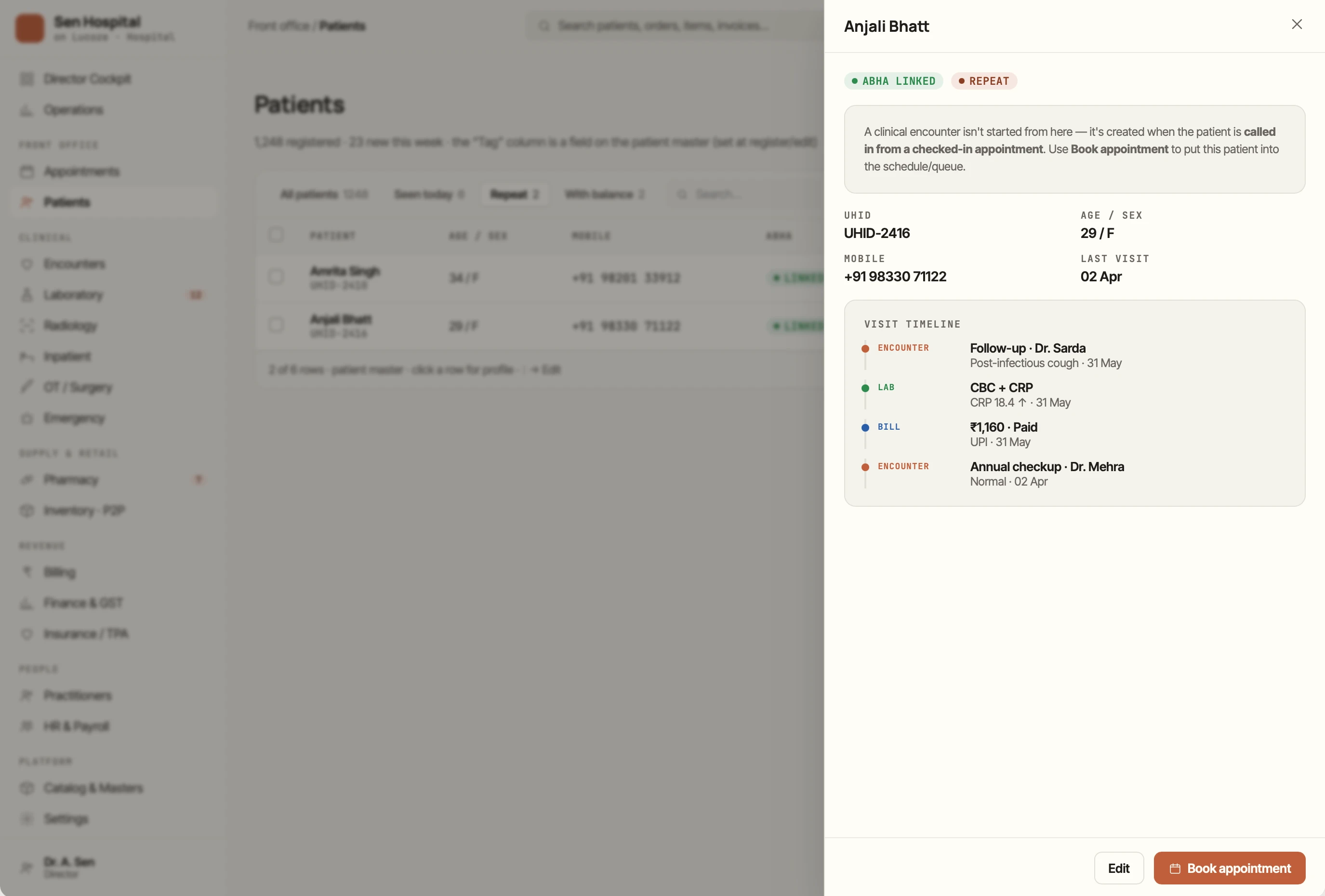
A derm practice runs medical dermatology and aesthetics side by side, and in India the two are often reported and taxed differently. Lucoze keeps a single patient timeline but separate ledgers, so cosmetic revenue can be reported apart from medical work — without maintaining two systems or double-entering a patient who does both.
Packages and recalls that match how derm sells
Aesthetic work is sold in courses — a laser package over several sessions, maintenance botox on a cycle. Lucoze models the package as one purchase with visits drawn against it, tracks the outstanding balance, and drives category-specific recalls (a biopsy review, a botox top-up, a laser follow-up) over WhatsApp so the calendar fills itself.
Photos, consent, and where they live
Every cosmetic procedure carries a documentation burden — a signed consent for the treatment and dated photographs to show progress. Lucoze attaches before and after images to the visit itself, so they sit on the patient's timeline next to the note rather than in a phone gallery or a separate drive. The consent step is captured at the same point, before the procedure runs, so the record and the sign-off travel together and can be found again when a patient asks about a result a year later. The images and the record stay in Indian data centres, which keeps patient photographs — some of them intimate — inside the country rather than on a foreign photo service.
Retail and dispensing, not just treatment
Most derm clinics sell as well as treat — cosmeceuticals over the counter, a prescribed retinoid dispensed at reception, a sunscreen the doctor recommends by name. That is retail sitting inside a clinic, and it needs real stock levels, not just a price list. Lucoze holds these products in inventory, decrements them when they are billed, and puts them on the same invoice as the consultation or procedure, so a patient who walks out with two products and a peel pays once. The front desk can see what is actually in stock before promising it, and reordering is driven by what has sold rather than a guess at the shelf.