A clinic tool breaks at 30 beds
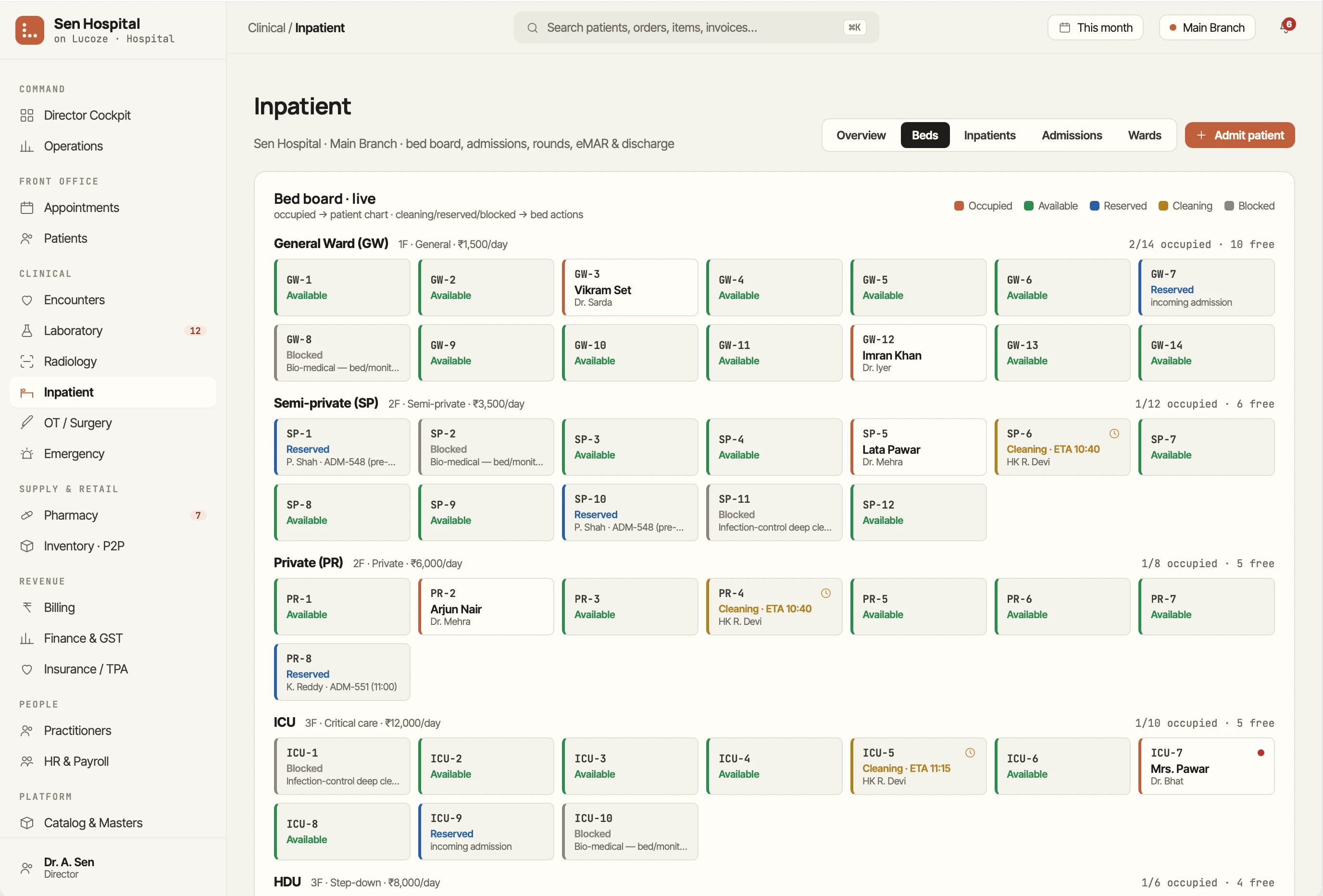
A small hospital has an ICU, wards, an OT, a Schedule-X pharmacy and a Medical Director who signs off on outcomes — none of which clinic software was built for. Lucoze runs inpatient care on a bed map where admission, discharge and the discharge summary are one record, and pharmacy, lab and OPD charges roll up into a single IPD bill instead of being chased across departments.
Theatre, materials and the metrics NABH asks for
Booking a surgery reserves the OT slot, the staff, the consumables and the post-op room together, and a cancellation releases the whole chain. The operational metrics an accreditation review expects — average length of stay, infection rate, medication errors — are produced from the same data rather than rebuilt in spreadsheets by the admin team.
The cashless claim that starts at admission
A large share of a hospital's revenue arrives through TPA cashless claims, and the supporting paperwork for each — pre-authorisation, approval, discharge documents — has to stay with the admission it belongs to. Lucoze keeps those documents on the same record as the patient's bed, drugs and procedures rather than in a separate claims file. When the patient is discharged the consolidated IPD bill — pharmacy, lab, OT and ward together — splits into the TPA-payable portion and the cash the family settles at the counter, so nobody reconstructs the split from a folder weeks later or discovers a shortfall after the patient has gone home.
Casualty registers first, paperwork catches up
An emergency case cannot wait for a registration desk to finish a form. Casualty intake opens a record with the minimum a resident needs to start treatment — a name or a provisional label, time in, the complaint — and lets clinical notes, drugs and investigations attach to it at once. The full identity, address, admission category and TPA details are reconciled afterwards, once the patient is stable, without creating a duplicate file. The same record then carries into the ward if the patient is admitted, so the emergency hour and the inpatient stay stay on one timeline rather than being stitched together from two systems.