Patient consent under DPDP, for a clinic front desk.
Notice, consent, and the rights your patients now have over their own data — the version your receptionist can actually use, not the legal one.
This is practical guidance for running a clinic, not legal advice. The Digital Personal Data Protection Act and its notified rules are the source of truth (linked at the end); check with a lawyer on specifics for your clinic.
The DPDP Act 2023 gave your patients rights over the data you hold, and gave you duties in return. Most writing about it is aimed at lawyers and platforms. This is the front-desk version: what changes at the counter, and what your team has to say and do.
What do notice and consent look like at the counter?
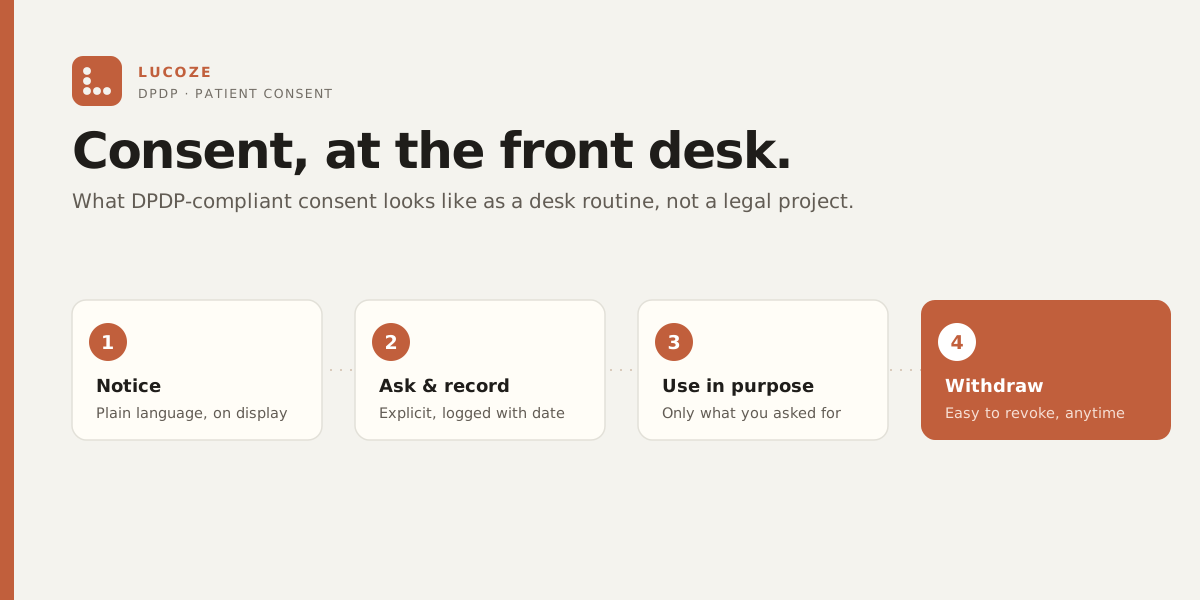
The core mechanism is simple. When you collect a patient’s data, you have to tell them — in plain language — what you’re collecting and why, and get their consent for it. Under DPDP, consent has to be free, specific, informed, and unambiguous. “The patient handed over their Aadhaar, so they must be fine with everything” is not consent. Silence is not consent.
Concretely, the floor for a clinic looks like this:
- A plain-language notice — on the intake form or a printed card at the desk — saying what you collect (name, contact, history, reports) and the purposes you’ll use it for.
- A consent line the patient actively agrees to, not a pre-ticked box. Consent is something the person gives, so the affirmative action has to be theirs.
- A way for the patient to withdraw consent and raise a complaint— stated in the notice, not left as optional footnotes.
The Act also expects notice to be available in English and the languages in the Constitution’s Eighth Schedule — for most clinics, that means the local language your patients actually read.
Can you use patient data for a new purpose?
This is the rule clinics trip over most. Consent is tied to a purpose. A phone number you collected for appointment reminders and lab results is for exactly that — not for a festival discount on health check-ups, and not for a diagnostics partner who pays for leads. Different purpose, new consent.
The lazy test: before any new use of patient data, ask “did we tell them this when we collected it?” If no, you either need fresh consent or you don’t do it.
Keep the data only as long as the purpose needs it, or as long as another law — like medical-record retention rules — requires. Data you no longer have a reason to hold is data you should be deleting.
What rights can patients now exercise?
A data principal — the patient — can exercise a set of rights. Your front desk needs to recognise these requests and route them, not freeze:
- Access. They can ask what personal data you hold about them and how you’ve processed and shared it.
- Correction and completion. If a record is wrong or incomplete — a mistyped allergy, an old address — they can ask you to fix it.
- Erasure. They can ask you to delete their data, subject to what retention laws require you to keep.
- Grievance redressal. They can complain to you first, and you must have a way to receive and answer that complaint before they escalate to the Data Protection Board.
- Nomination. They can nominate another person to exercise these rights on their behalf if they die or become incapacitated.
None of this works if you can’t find a patient’s data quickly — that’s a records problem before it’s a legal one. Being able to pull, correct, or export one patient’s file on request is exactly what structured patient records are for.
How does consent work for children?
Paediatric and family clinics need to notice this one. For a minor, you need verifiable consent from a parent or lawful guardian — not the child’s own consent — so your intake has to capture who that consenting adult is. The Act also restricts using children’s data for tracking, behavioural monitoring, or targeted advertising: for a clinic, that means don’t market to or profile kids off their health data. The same logic applies to any patient with a legal guardian.
What happens when a patient withdraws consent?
A patient can withdraw consent, and the Act says doing so should be as easy as giving it was. When they do, you stop the processing that consent covered — going forward. It doesn’t undo lawful things you already did, nor override records you’re legally required to retain. But you can’t keep using their data for the withdrawn purpose, say marketing, once they’ve pulled consent. Your team needs a way to record and honour a withdrawal, not just nod and forget.
Is DPDP consent the same as ABHA consent?
Here’s the distinction that confuses everyone. DPDP consent is about you collecting and using a patient’s data in your clinic. ABDM/ABHA consent is a different, narrower thing: it governs sharing a patient’s health records between providers over the ABDM network — pulling a record into their ABHA, or letting another hospital fetch it, through the consent-manager flow.
They overlap but don’t replace each other. ABHA linkage consent doesn’t cover your DPDP obligations at the front desk, and DPDP intake consent doesn’t authorise record-sharing over ABDM. If a vendor says “we’re ABDM-ready, so you’re DPDP-compliant,” that’s a category error. You need both, for different reasons.
Where does the software fit?
Much of DPDP is process, but the parts that need software are real: capturing consent against a purpose, finding and correcting a record, honouring a deletion or withdrawal, and keeping data in India. Lucoze is built so consent capture is part of the intake flow rather than a form in a drawer, and so a patient’s record is one lookup away when they exercise a right. We’re early-stage and working with design-partner clinics, so this is how the product is built to work, not a compliance guarantee — the obligations are yours; the software just makes them cheaper to meet.
Sources
- Ministry of Electronics & IT — Data Protection Framework — MeitY’s official page for the Digital Personal Data Protection Act, 2023 and its rules, where notice, consent, data-principal rights, and children’s-data provisions are defined. The rules have been notified in stages, so this page carries the current text.
- Ministry of Electronics & IT (MeitY) — the ministry that administers the Act and notifies the DPDP Rules.
Closing
None of this requires a legal department. It requires a clear notice, real consent tied to a purpose, and the ability to find and act on one patient’s data when they ask. Get those three right and you’re most of the way there.
If you want to talk through how your clinic’s intake and records would handle this — consent, rights requests, the ABDM split — reach out. No pitch attached.