The clinic billing stack, tied together.
A clinic's 'billing' is really four or five different kinds of billing that have to reconcile into one day's collection. When they don't talk, money leaks.
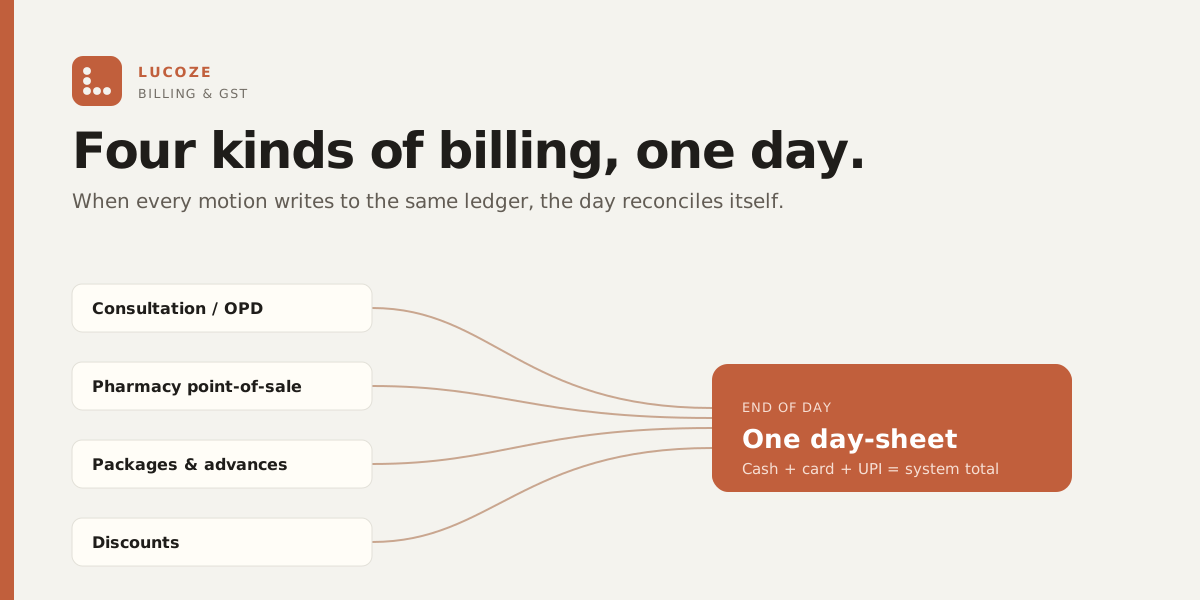
Ask a clinic owner “how does billing work here” and you’ll get a simple answer: patient pays, we give a receipt. Sit at the front desk for an afternoon and you’ll see something else entirely — four or five different billing motions, each with its own rules, all of which have to add up to one number at the end of the day. When they live in separate books, that number never quite matches, and nobody can say where the gap went.
Billing isn’t one thing
Here’s what’s actually happening under the word “billing” at a working clinic:
- Consultation / OPD billing. The doctor’s fee for a visit. Simple on its own — flat or per-specialty — but it’s the line most likely to be given away informally (“tell them no charge for the follow-up”) and never recorded.
- Pharmacy point-of-sale. Selling medicine is retail, not consultation. Each sale has to decrement stock, pick the right batch, respect expiry, and warn when something’s running low. A receipt that doesn’t move inventory is just a number — the shelf and the system drift apart within a week.
- Procedure and package billing. A dressing, a minor procedure, a physiotherapy package, an antenatal bundle. These carry a bundled price, often collected across visits as advances and staged payments. “Paid ₹5,000 of a ₹12,000 package” is a state your books have to hold, not a receipt you file once.
- Discounts. Every clinic gives them — camp rates, staff family, the doctor’s own call. The question isn’t whether to allow discounts, it’s who’s authorised to give them and up to what limit. Unlogged, uncapped discounts are the quietest leak in the building.
It all has to reconcile to one day
At close, none of these matter individually. What matters is the day-sheet: what did we collect today, and does it match what’s in the drawer and the accounts? Cash counted, card settlements, UPI receipts — added up, they should equal the system’s total for the day. When they don’t, the honest answer is usually not theft. It’s an OPD fee waived and never entered, a pharmacy sale rung up outside the system, a package advance sitting in someone’s memory, a discount nobody recorded.
Fragmented billing doesn’t leak money in one dramatic hole. It leaks in ten small ones you can’t see, because no single book ever shows the whole day at once.
The fix isn’t stricter people. It’s a stack where every one of those motions writes to the same ledger, so end-of-day reconciliation is a report you read, not an investigation you run.
Why is pharmacy the hard one?
Consultation and procedure billing are mostly about recording. Pharmacy is about state. Every sale touches live inventory — the right batch has to come off the shelf in the system exactly as it does in real life, expiry has to block a bad pack, and a low-stock line has to raise its hand before you run out mid-week. A pharmacy counter billing on a separate app, or on a notebook, guarantees two things drift: your stock count and your revenue count. By month-end neither can be trusted, and the reorder list is a guess.
Lucoze links pharmacy billing to live stock, so a sale decrements the batch, respects expiry, and surfaces low-stock lines as it happens — one action, not a sale plus a separate stock adjustment somebody has to remember. That’s the design intent behind our pharmacy module, and it’s the piece that keeps the day-sheet honest.
The GST wrinkle, briefly
Here’s where the two halves collide on one piece of paper. A single visit can produce one invoice that mixes an exempt line (the consultation — healthcare services are GST-exempt) and taxable lines (the medicines sold at the pharmacy counter). The invoice has to carry both correctly: exempt shown as exempt, taxable at the right rate, totals that a tax filing can stand behind. Get the split wrong on every mixed invoice and it compounds quietly into a reconciliation and compliance problem at return time.
That’s a whole topic on its own — HSN codes, rates, exempt-vs-taxable classification, what the invoice must show. We cover it properly in the pillar: GST for clinics, with the pharmacy-counter specifics — Schedule H, HSN, getting the invoice right — in pharmacy billing and GST. For here, the point is narrower: a connected billing stack can put exempt and taxable lines on the same invoice and still keep the books clean, because it knows which line is which as it’s created.
What does “tied together” actually buy you?
When consultation, pharmacy, packages, and discounts all write to one system, a few things stop being problems. Discounts run against a rule — who can give them, up to what — instead of against trust. Package advances carry their balance forward on their own. The pharmacy shelf and the pharmacy revenue stay in step. And the day-sheet is a single reconciliation of cash plus card plus UPI against one system total, produced in a minute at close, not pieced together the next morning from three books.
That’s the shape of the billing module we’re building — not billing as a receipt printer, but billing as the layer that ties the day’s money into one honest number.
Closing
Lucoze is early — we’re building this with design-partner clinics, not claiming a finished product. If your clinic’s collection never quite reconciles, and you can’t say whether it’s discounts, pharmacy, or waived fees doing it, that’s exactly the problem this stack is meant to close. If you’d like to walk through where your billing leaks, get in touch. No pitch attached.