Why 'cashless approved' still gets paid short: room rent and sub-limits.
The approval letter says one number; the settlement pays less. Usually it isn't a rejection — it's a room-rent sub-limit and proportionate deduction. Here's the mechanism, and the 2024 IRDAI rule that limits it.
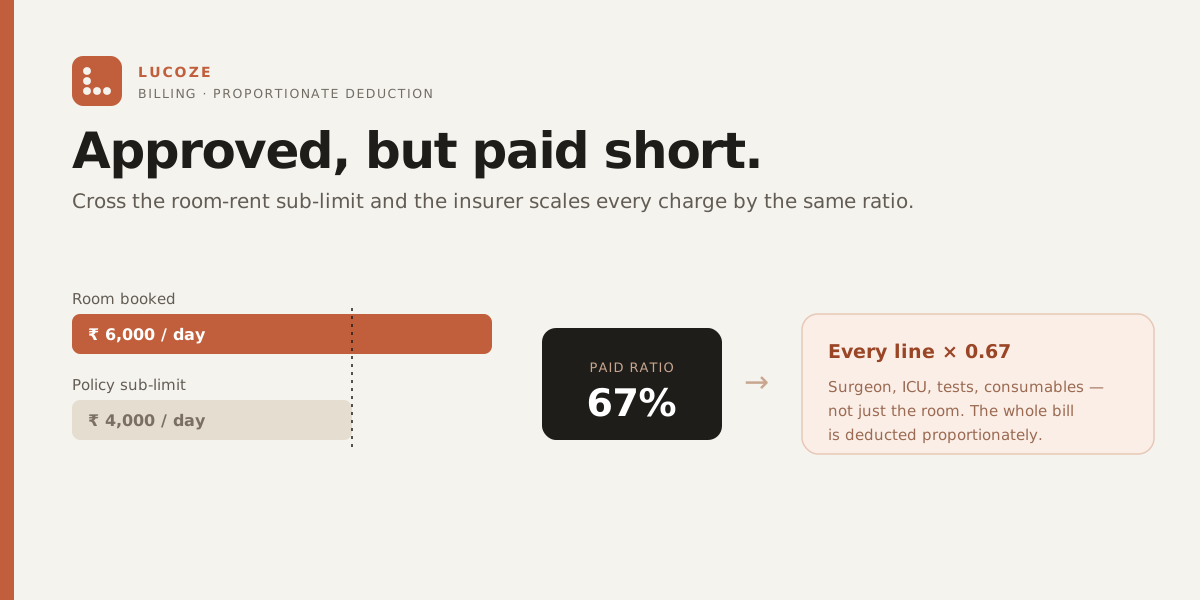
One of the most confusing moments in hospital billing is the claim that was approved and still gets paid short. Nothing was rejected. The pre-auth came through, the patient was treated, the documents were clean — and the settlement is thousands less than the bill. Nine times out of ten the culprit isn’t fraud or error. It’s a room-rent sub-limit doing exactly what the policy said it would, in a way nobody explained to the patient at admission. This is a plain walk through the mechanism so it stops surprising your billing desk. It’s general information — the exact clauses live in each patient’s policy.
What is a room-rent sub-limit?
Many health policies cap what they’ll pay for the room per day — often as a percentage of the sum insured (say, a set percent per day), or a fixed amount, or by room category (“shared” or a named tier). Take a room at or below that cap and nothing happens. Take a room above it — because it’s what was available, or what the family asked for — and you’ve triggered a clause most people have never read.
Why does a bigger room cut more than just the room?
This is the part that catches people. Many policies with a room cap also carry a proportionate deduction clause: because higher room categories often come with higher linked charges (nursing, some professional fees), exceeding the eligible room rent lets the insurer scale down defined “associate medical expenses” in the same proportion — not only the room line. A modest room upgrade can therefore shave a percentage off other charges too, which is how “approved” quietly becomes “paid short.”
What changed in 2024 — and why it matters at your desk
Crucially, the scope of that deduction is now limited. Under the IRDAI Health Insurance Master Circular dated 29 May 2024, room-rent sub-limits remain a permitted policy feature but must be clearly disclosed, and proportionate deduction can only be applied to the defined set of associate medical expenses. Insurers cannot apply it to pharmacy and medicines, implants, medical devices, or diagnostics. In other words, the old practice of scaling down the entire bill against a room overage is no longer permissible — the deduction is narrower than many billing desks (and many insurers’ older systems) still assume.
That cuts both ways for your desk. The genuine shortfall on an above-cap room is smaller than it used to be — but that also means a settlement that does deduct from pharmacy, implants, devices, or diagnostics on room-rent grounds is one you can question, citing the current circular. You only catch it if you reconcile.
What can the billing desk actually do about it?
You can’t rewrite the patient’s policy, but you can stop the surprise — and surprise is what turns a short payment into a bad debt and an argument at discharge:
- Check the room eligibility at admission, not discharge. The pre-auth is the moment to know the room cap and flag it. A patient who chooses a higher room having been told the proportion applies is a very different conversation from one who finds out on the final bill.
- Estimate the likely deduction up front. If the room is above cap, the shortfall is roughly predictable. Telling the family “the insurer will cover about this much, and this much is yours” at admission is honest and prevents the discharge stand-off.
- Reconcile every settlement against the bill. When payment lands short, someone has to check whether the deduction matches the policy’s clause or whether the insurer over-deducted — which does happen and can be contested. Without that reconciliation step, you eat both the fair deductions and the unfair ones.
Why this is a tracking problem, not a negotiation one
The hospitals that bleed on sub-limits aren’t the ones with tough insurers — they’re the ones without a running view of what was billed versus what was settled. When every claim carries its approved amount, its settled amount, and the gap, a pattern of short payments becomes visible and the genuinely wrong ones become contestable. This is the same reconciliation discipline that keeps claims from ageing, described in our TPA and insurance claims guide. Lucoze is built to hold approved-versus-settled on each claim so a short payment is a flagged gap to review, not a number that quietly disappears into “insurance is like that.”
Sources
- IRDAI — the Health Insurance Master Circular (29 May 2024) governs sub-limit disclosure and limits proportionate deduction to defined associate medical expenses (excluding pharmacy, implants, devices, diagnostics). Policy-specific clauses always control the individual claim.
- The patient’s policy schedule and Schedule of Benefits — where the room-rent cap and the exact proportionate-deduction wording are stated for that policy.
Approved isn’t paid until it’s reconciled
Room-rent sub-limits are a legitimate, contractual part of how policies work — but only if your desk sees them coming and checks the maths afterward. Flag the room at admission, estimate the proportion, reconcile the settlement. If you want to look at where your cashless claims are getting paid short, reach out — no pitch attached.