ABHA number vs ABHA address vs PHR address: the difference
Three things that sound alike and aren't: the 14-digit ABHA number, the ABHA address, and the PHR address. What each is and which your front desk uses.
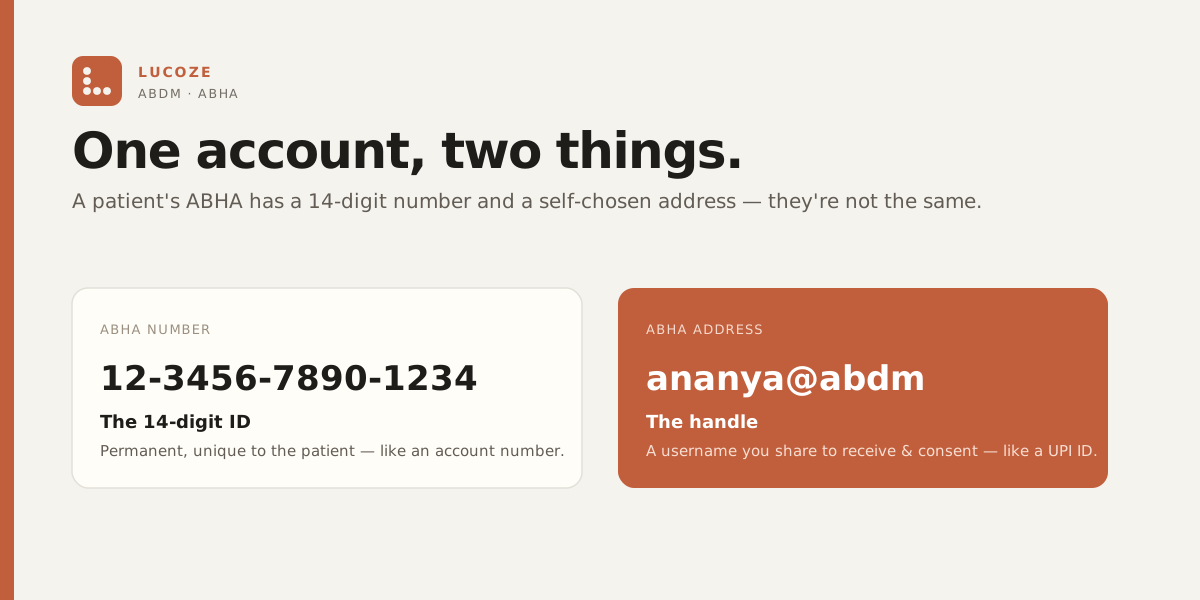
An ABHA (Ayushman Bharat Health Account) has two parts people mix up. The
ABHA number is a permanent 14-digit health ID that identifies the
patient across ABDM. The ABHA address is a self-chosen, email-like handle (for
example ananya@abdm) the patient shares to receive records and consent to sharing them.
The number is the account; the address is the handle that sits on top of it.
A plain explainer, not official guidance. The patient-facing portal at abha.abdm.gov.in is the source of truth for how ABHA is created and managed.
What is an ABHA?
An ABHA — Ayushman Bharat Health Account — is the patient’s identity under the Ayushman Bharat Digital Mission (ABDM). It’s how a person collects their health records from different hospitals into one place they control. But an ABHA comes in two parts that get confused constantly: the ABHA number and the ABHA address.
The ABHA number (the 14-digit ID)
The ABHA number is a 14-digit unique identifier — think of it as the patient’s permanent health ID, the way a UPI-linked bank account has an account number. It uniquely identifies the individual across ABDM. It’s stable and it’s theirs for life.
On an ABHA card the number is usually printed as 14 digits grouped for readability
— XX-XXXX-XXXX-XXXX — next to the patient’s name and their ABHA address. The card is
just a convenient way to carry the same number; it isn’t a separate ID, and the digits don’t change.
The ABHA address (the handle)
The ABHA address is a self-chosen username that looks like an
email — for example ananya@abdm. It’s the handle a patient shares to receive
records into their account and to consent to sharing them. If the 14-digit number is the account,
the address is the “@handle” you actually hand over — much like a UPI ID sits on top of a bank
account number.
A person can have more than one ABHA address, but they map back to the one ABHA number.
Which one does the front desk use?
Mostly the ABHA address (or a linked mobile/scan), because that’s what a record is sent to and what consent is tied to. The number sits underneath as the permanent identity. What matters operationally is simply: capture or create the ABHA at registration, and issue the visit’s records to it — we walk through that in creating an ABHA at the first visit.
The reason a hospital cares at all: your HFR-registered facility and HPR-registered doctors issue records; the patient’s ABHA is where those records land. All three have to line up for ABDM to actually work.
What about the “PHR address”?
If you’ve come across the term PHR address and wondered how it differs from the
ABHA address — it doesn’t, really. The PHR address is the ABHA address. “PHR”
stands for Personal Health Records, and the same human-readable handle (for example
yourname@abdm) is what a patient uses to sign in to a PHR app and to receive and
consent to records. Different name, same identifier — so if a form asks for a “PHR address,” it
wants the patient’s ABHA address, not the 14-digit number.
In Lucoze, linking an ABHA and issuing records to it is part of the normal registration flow, with data hosted in India. To see it on your hospital’s day, book a demo.
ABHA number and address — quick answers
What is an ABHA number? The ABHA number is a 14-digit unique health ID that
identifies a patient across ABDM. It’s permanent and stays with the person for life; on an ABHA card
it’s usually shown as 14 digits grouped like XX-XXXX-XXXX-XXXX.
What does the ABHA address mean? An ABHA address is a self-chosen, email-like
handle (for example ananya@abdm) that a patient shares to receive health records and
give consent to share them. It sits on top of the 14-digit ABHA number, the way a UPI ID sits on a
bank account number.
Is the PHR address the same as the ABHA address? Yes — they’re the same human-readable handle. If a form asks for a “PHR address,” it wants the patient’s ABHA address, not the 14-digit number.
Sources
- National Health Authority (NHA) / ABDM — abha.abdm.gov.in and abdm.gov.in. Confirm current creation, KYC and management steps on the portal.